
Low Level Light Therapy (LLLT)
Low Level Light Therapy (LLLT)
What is Low Level Light Therapy?
Low Level Light Therapy, commonly known as LLLT therapy, uses focused red LED light at a wavelength of 633 nanometers to safely heat the eyelids. Red light has been used in the field of dermatology for a decade. It’s now being used in eye care to treat lid lumps and bumps along with dry eye, ocular rosacea and more. Because the heat is endogenous, there are no thermal risks.
LLLT therapy increases tissue repair and healing. It has beneficial effects on wrinkles, acne scars, hypertrophic scars and the healing of burns.
Millions of people suffer worldwide from Dry Eye Disease (DED), which can affect their work, lifestyle and comfort. The causes are varied, but a signification factor is the health and operation of the Meibomian glands. These glands are visible just behind the eyelashes on both lids; they supply an oily top pater to the tears to reduce evaporation. When they are not working well, suggested treatment ranges from lid hygiene and warm compresses to eye drops and oral medications.
Inflammation is a major cause of Dry Eye Disease. After LLLT therapy, the amount of tear volume was increased and corneal surface irregularities were restored. Also, the level of inflammatory cytokines significantly decreased as well.
Sustained heat to the Meibomian glands is key in treating Meibomian Gland Dysfunction and getting to the root cause of dry eye symptoms. The melting point of Meibomian gland secretions ranges from 32°C to 40°C, with melting points elevated in patients with Meibomian Gland Dysfunction, allowing secretion to stagnate. LLLT generates endogenous heat at the point of use. The depth of penetration of light with a wavelength of 600 – 650 nm into the skin is 1 – 2 mm.
Warm compresses have long been recommended by eye care practitioners. However, warm compresses rapidly lose heat and fall below the therapeutic temperature of 40°C within the first application. Even commercially available eyelid masks microwaved for 10-20 seconds do not remain consistently above 38°C for the entire 10-min treatment. An evaluation of eight methods of eyelid warming found that the method that mostly effectively maintained internal eyelid temperature, the bundle method, was also the most cumbersome.
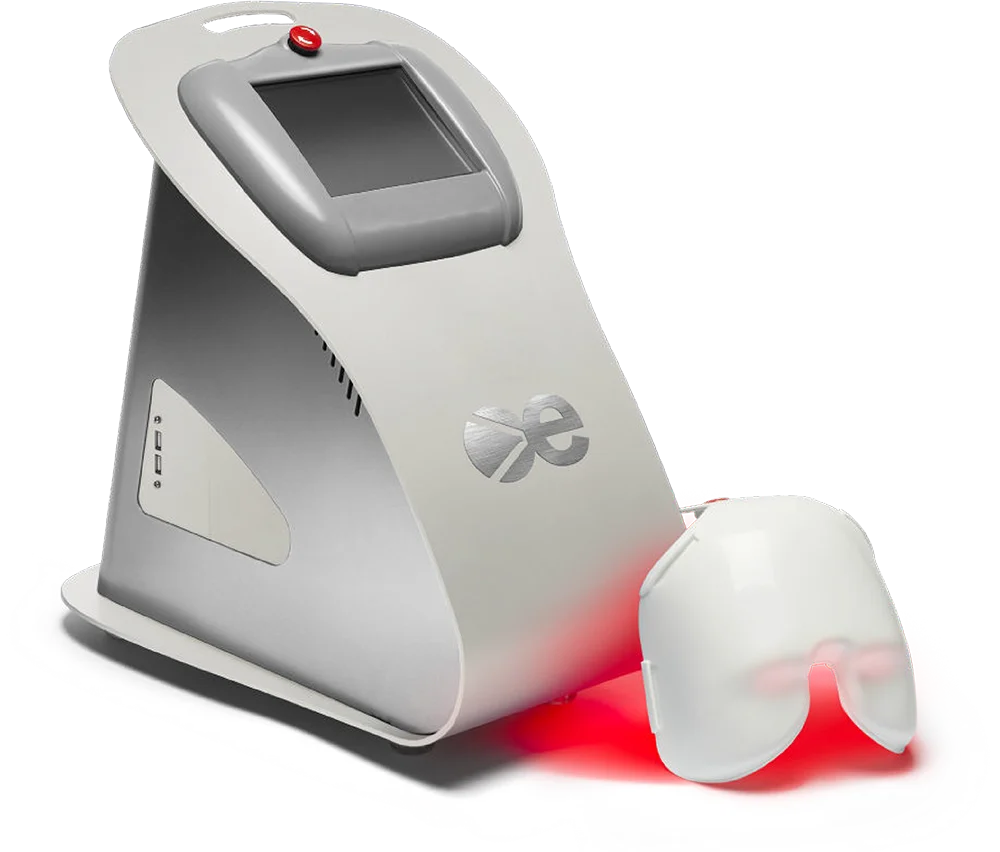
Equinox LLLT Therapy at Helmus Optometry
At Helmus Optometry, we use Equinox LLLT therapy to treat patients living with Dry Eye, Meibomian Gland Dysfunction, Hordeola (“Styes”) and Chalazion regardless of skin type.
In addition to the therapeutic benefits, LLLT therapy is non-invasive, pain-free and available to patients on all levels of the Fitzpatrick Scale – a skin classification system used to categorize human skin based on the amount of melanin, its reaction to ultraviolet (UV) light and whether it is more likely to burn or tan.
Key Benefits of LLLT Therapy
Reduce UV damage both as a treatment and as a prophylaxis
Stimulates healing
Reduces inflammation (inflammatory diseases such as psoriasis and acne can also benefit)
Promotes contractions of untreated wounds
Activates fibroblasts and improves collagen synthesis
Minimizes Demodex mite infestation
Recommended before refractive surgery (LASIK) and refractive cataract surgery to improve accuracy of pre-op measurements
LLLT therapy treatments are quick – each session requiring only 17 minutes. The procedure is administered by one of our fully trained Clinical Technicians. A comprehensive eye exam within the past 12 months is recommended before beginning LLLT therapy treatments.
LLLT therapy costs $170/treatment and is not covered by any insurance. Patients who don’t experience an effect with a single treatment can undergo ongoing treatments. LLLT therapy treatments taken over a short period (1-4 sessions), benefits the majority of patients living with Dry Eye Disease.
How LLLT Therapy Works
LLLT therapy, uses specific wavelengths of light to treat various conditions:
Redlight stimulates production of collagen and elastin—Red light is absorbed by mitochondria and stimulates ATP increasing cellular action, enhancing its activity.
Yellow light takes specific action on the lymphatic system—Yellow light stimulates cells’ metabolism promoting a detoxifying action to relieve swelling conditions.
Blue light is responsible for purification action—Blue light is recognized to be the ideal wavelength to solicit porphyrins to obtain a bacteriostatic effect with a consequent elimination of bacteria.